
Central Path of the Tamsui-Kavalan Trails: A 3–4 Day End-to-End Hiking Guide
The Tamsui-Kavalan Historic Trails (Dan-Lan) (淡蘭古道) are among the most popular long-distance hiking routes in
northern Taiwan, with many guides covering individual sections. My personal favorite is the Central Path
(淡蘭古道中路), also known as the Commoners' Path (民道).

This route stands out for its rich history and quiet beauty—ancient stone paths, old houses, Earth God
shrines, and forest trails where creeks flow alongside the route.
I've hiked many sections of the Central Path over the years, but this post documents something different:
walking the Central Path in a single continuous journey. Since wild camping is not widely welcomed in Taiwan,
and to respect local communities, I don't share specific camping locations here.

Instead, this guide focuses on trail highlights, overall route planning, public transport access, and how to
break the trail into day hikes. If you're looking for a permit-free, flexible multi-day hike in northern
Taiwan, this post will help you understand what it takes to complete the Central Path in one go.

Disclaimer:
All content is for inspiration only. Use Taiwan Hikes' suggestions at your own risk. We are not responsible for any losses, injuries, or damages.
All content is for inspiration only. Use Taiwan Hikes' suggestions at your own risk. We are not responsible for any losses, injuries, or damages.
Table of Contents:
- Trail Overview: The Central Path of Tamsui-Kavalan Historic Trails and Maps
- What to Know About Wild Camping in Taiwan and Leave No Trace (LNT)
- Walking the Central Path End to End: A 4-Day Itinerary
- Getting There and Back: Public Transportation Tips
- Practical Tips: Weather, Gear, Physical Fitness, and Preparation
- Related Posts
Trail Overview: The Central Path of Tamsui-Kavalan Historic Trails and Maps
Trail Name: The Central Path of Tamsui-Kavalan Historic Trails (Danlan
Trail)
Distance: 60 km (37.3 miles)
Route type: Point-to-point, with a loop section in the middle portion
Days/Hours Needed: 4 days is the most accessible and enjoyable pace for most hikers.
Best Time to Go: Early spring, autumn, or winter, when the weather is cooler and less humid.
Permits: Not required
Difficulty Level:
Distance: 60 km (37.3 miles)
Route type: Point-to-point, with a loop section in the middle portion
Days/Hours Needed: 4 days is the most accessible and enjoyable pace for most hikers.
Best Time to Go: Early spring, autumn, or winter, when the weather is cooler and less humid.
Permits: Not required
Difficulty Level:
The Central Path is made of 18 trails across Keelung,
Pingxi, Shuangxi (New Taipei City), and Wai'ao (Yilan County). Most of the trails are easy to hike, and many
follow creeks through shaded forest, making the route enjoyable even during warmer seasons.
You can find the detailed map from the official Tamsui-Kavalan Historic
Trails made by the Northeast and Yilan Coast National Scenic Area Headquarters of Tourism
Administration. The official website also provides historical background and stories behind each trail
section.
What to Know About Wild Camping in Taiwan and Leave No Trace (LNT)
According to Taiwan's law, wild camping is PROHIBITED in the following protected areas, and
violations may result in fines.
- All 9 national parks and the national nature park, except at designated campgrounds (permits required)
- 22 nature reserves
- 21 wildlife refuges and 39 major wildlife habitats
- 6 forest reserves
Together, these protected areas cover roughly 6,900 ㎢, or about 19% of Taiwan's total land area,
excluding overlapping and marine zones.
Setting a campfire, using camping stoves or gas canisters in the protected areas listed above is also
prohibited.

This does not mean wild camping is automatically allowed outside protected areas. Much of the land in Taiwan
is privately owned, and landowners may not welcome hikers camping on their property.
If you choose to camp, please follow LNT, Leave No Trace, principles carefully.
- Plan Ahead and Prepare.
- Travel and Camp on Durable Surfaces.
- Dispose of Waste Properly.
- Leave What You Find.
- Minimize Campfire Impacts.
- Respect Wildlife.
- Be Considerate of Others.
Planning a permit-free hike by bus?
Skip the research. This guide covers 45 relaxing, permit-free trails in every Taiwan county — with trailhead maps and the exact public transport to reach each one. Everything you need to just show up and hike.
Get all 41 trails + maps →Walking the Central Path End to End: A 4-Day Itinerary
I first completed the Central Path over three days, then returned several times to walk the sections I had missed. Based on those experiences, I've outlined four practical ways to hike the Central Path in 4 days. You may encounter hiking trips that cover the Central Path in either 2 or 3 days. These groups typically hire a bus to transport hikers back to the B&B, saving time.
Each option is designed to balance distance, daylight, safety, and enjoyment, and all can be paired with
public transportation to make planning and logistics smoother.
That said, trail conditions can change. Careful planning, proper preparation, and personal safety remain your
responsibility when hiking the Central Path.
Day 1 Itinerary: From Nuandong Valley to Shihfen
Brief itinerary: Nuannuan Train Station 暖暖車站 or Keelung Train Station 基隆車站 ➔ Nuandong
Valley/Lapopo Campground (bus stop) 暖東峽谷/拉坡坡村 ➔ Old Nuandong Trail (Nuandong Historical Trail) 暖東舊道
➔ Junction to Wufenshan Meteorological Radar Observatory 五分山氣象站, Lingtou Earth God Temple 嶺頭土地公廟, and
Mt. Dingzhiliao 頂子寮山 ➔ XPX Taiwan Coal Mine Museum/Yunmei Trail (Coal transporting Trail) ➔
Shihfen
Estimated hiking time: 5-6 hours (excluding side trips to waterfalls)
Hiking from Nuandong Valley to Old Nuandong Trail
Take a train to Nuannuan or Keelung Station, then transfer to Bus 603 (Dongshih Keng line). Get off at
Nuandong Valley Stop (暖東峽谷) and start hiking directly from the bus stop.

The hike begins on the Nuandong Valley Trail, marked TK2-2 on the map, a gentle, scenic path that follows a
creek through lush forest. This section is easy to walk and serves as a relaxed warm-up. Soon, the trail
transitions into stone steps leading up to the Old Nuandong Trail, TK2-3, also known as the Nuandong Historic
Trail.

You might be wondering where TK2-1 is. If you walk from Nuannuan Train Station to the Nuandong Valley
Stop instead of taking the bus, you will arrive at TK2-1.

Junction Area: Wufenshan Trail, Temples, and Viewpoints
After approximately 1 km, you'll reach a junction connecting to the Wufenshan Trail. Near this junction,
you'll find Lingtou Earth God Temple 嶺頭土地公廟 / 福德宮 and Mt. Dingzhiliao 頂子寮山.


This area offers occasional open views and is a good spot for a short break.

You'll see a sign pointing to the Wufenshan Trail (TK2-4). Do not follow the Wufenshan direction. Continue
straight along the Central Path instead. You should see the XPX Taiwan Coal Mine Museum very soon.

Coal Transporting Trail: XPX Museum and Yunmei Trail
Continuing forward, you'll pass the XPX Taiwan Coal Mine Museum and reach the Yunmei Trail 運煤道, TK2-5, also
known as the Coal
Transporting Trail, a former coal railway. Parts of this section follow old rail tracks.

Safety reminder: Tourist trains may still operate on this line. Stay alert, listen carefully, and give
trains the right of way at all times.
Look for a pink warning sign and a yellow directional arrow—follow the arrow to exit the railway section and
reach a paved road.
Arrival in Shihfen
After about 15 minutes on a paved road, you'll arrive in Shihfen, famous for its sky lanterns and historic
railway town atmosphere. If you're considering releasing a lantern, be sure to read up on environmental and
safety concerns beforehand.

Where to Stay & Side Trips
- Numerous B&Bs in Shihfen make it a convenient overnight stop.
- Walk to Shihfen Waterfall, one of the most famous waterfalls in northern Taiwan.
- For a quieter alternative, visit Wanggu Waterfall 望谷瀑布 near Wanggu Station 望谷車站.

Before releasing a lantern, please read the issues about sky lanterns first.

You can find a B&B to stay and visit Shihfen, or walk to the famous Shihfen Waterfall if you don't plan to camp.

Day 2 Itinerary: Shihfen to Ganjiao
Brief itinerary: Shihfen ➔ Fanzikeng Hiking Trail 番子坑步道 ➔ Pinghu West Hiking Trail 平湖西步道
➔ Pinghu East Hiking Trail 平湖東步道 ➔ Dakeng Mountain Ridge Trail 大坑山稜線步道 ➔ Shannei Pinglin
Hiking Trail 上內平林步道 (Note) ➔ Ganlin (Ganjiao) Weihui Temple in Ganjiao 柑林威惠廟
Estimated hiking time: 7-8 hours, including an optional round trip of about 1 hour to Shihfen Waterfall.
(optional)
When I first did this hike, my friends and I took a taxi from Shihfen to Ganjiao and stayed overnight there. I
later returned to hike this entire section on a separate day. In hindsight, taking a taxi was a good decision,
as hiking from Nuandong Valley all the way to Ganjiao in one day would be overly demanding for most hikers.
Where to Stay in Ganjiao
While staying in Ganjiao, I walked along the river and explored the area.
- Plein Soleil Coffee Roasters 柑腳驛站: A café and B&B with comfortable dorm beds, friendly hosts, and excellent coffee. The hosts speak English, too. I'm not affiliated with this place, but it's a great option if you enjoy good coffee and a relaxed atmosphere.
- Shuangxi Mountain Mingshui Homestay 雙溪山明水舍民宿: A good alternative if you prefer a private room.


Ganjiao is a relatively populated area. For this reason, I recommend staying at a B&B instead of wild camping.

Hiking from Shihfen to Fanzikeng Trail
The trailhead of Fanzikeng Hiking Trail (TK2-6) is not far from Shihfen. I've walked this trail three
times, and it remains one of my favorite sections of Day 2.

The path is well-defined, with steady climbs and pleasant views along the way, making it a rewarding start to
the day.

Pinghu West & Pinghu East Trails
After the Fanzikeng Trail, you'll connect to the Pinghu West (Pinghuxi) Trail (TK2-7), a relatively short
section that soon leads back to a paved road.

Before turning onto Pinghu East (Pinghudong) Trail (TK2-8), you'll find public toilets, which are a convenient
stop before continuing into more remote terrain.


Dakeng Mountain Ridge Trail
At the next junction, turn right into the dirt trail—this is the Dakeng Mountain Ridge Trail (TK2-9). Compared
to the earlier stone steps, this section is more rugged, but still manageable for hikers with basic mountain
experience.


I reached Dakeng Mountain and soon encountered a wide, barren slope. This area is known as Chipilun (赤皮崙).

Landslide Area & Safety Note (Important)
A section of the Shannei Pinglin Hiking Trail, TK2-10, including the Chipilun area 赤皮崙, is prone to
landslides. When I hiked this route, the trail toward Juansi Waterfall 絹絲瀑布 was already closed. It was later
closed again due to another landslide.

If you choose this route:
- Expect temporary closures
- You may need to walk on paved roads for safety
- Always check recent trail conditions before starting
Because of these closures, I took the paved road instead and continued safely to Ganlin Weihui Temple in
Ganjiao, marking the end of Day 2.

Day 3 Itinerary: Ganjiao to Wantan/Taiping
About the loop: From Ganjiao, the Central Path splits into a loop. This hike follows the right half of
the loop toward Taiping 泰平. The left half—via Zhongkeng, Fangshankeng, and Kuolai Historic Trails—has multiple
landslide-prone sections and is often difficult to pass.
Trail Conditions on the Left Half
Several hikers have reported that landslides and difficult terrain frequently impact the following historic
trails on the left half of the loop:
- Zhongkeng Historic Trail (中坑古道) (TK2-11)
- Fangshankeng Historic Trail (枋山坑古道) (TK2-12)
- Kuolai Historic Trail (闊瀨古道) (TK2-13)
If you're planning a loop hike, always check recent trail conditions and be prepared to adjust your route.
The itinerary of the right half of the loop:
Brief itinerary: Ganjiao 柑腳 ➔ Bengshankeng Historic Trail 崩山坑古道 ➔ Beishixi (Beishi River)
Historical Trail 北勢溪古道 ➔ Sanshuitan (Sanshui Lake) and Earth God Temple 三水潭和土地公廟 ➔ Wantan
Historic Trail 灣潭古道
Estimated hiking time: 7-8 hours
Important Update: Beishixi Trail is closed due to landslides on June 27, 2026. Check Pingxi District Office's Facebook page for updates before you go.
Ganjiao to Bengshankeng Historic Trail
The morning at Plein Soleil Coffee Roasters was tempting enough to stay another night, but the trail was
calling. From Ganjiao, we followed the paved road to the entrance of Bengshankeng Historic Trail (TK2-14). A
sign at the trailhead indicates 6,160 meters to Taiping, giving a clear sense of the day's distance.

Much of this section follows the Ganjiao River, making for a scenic and gentle start. Along the way, we passed
old houses and small Earth God temples, reminders of the communities that once relied on this route.


After entering the bamboo forest, we encountered a junction leading to a shortcut. We chose to try it—but it
turned out to be a mistake. This shortcut had not been maintained after typhoons, with fallen trees and
overgrown vegetation blocking the way, so we had to backtrack.

Later, while hiking with another couple, casual conversation led to two missed junctions, including the
turnoffs to Hubao Pond. This was a good reminder that on complex historic trails, navigation deserves full
attention.
I had hoped to revisit Hubao Pond, but we missed two key junctions. If you want to include Hubao Pond in your
hike, pay close attention to junctions in this area. If you want to visit Hubao Pond, please follow the trail map provided by the Northeast and Yilan Coast National Scenic Area Headquarters of Tourism Administration closely.


Hubao Pond is highly weather-dependent. Always check the river and rainfall
conditions before heading there.

Sanshuitan: Where Three Rivers Meet
From the junction area, we chose to walk on paved roads temporarily before rejoining the trail near a map
marker labeled TK2-15. We followed the signs toward the Sanshuitan Earth God Temple, about 3.4 km from that
point.


After passing a house with an address plate marked 26, we re-entered the trail and encountered multiple river
crossings.

Soon after, we entered one of the most memorable
sections of the entire hike: clear water, gentle curves in the river, small waterfalls, and a peaceful
atmosphere that made it hard not to stop.


Then, we passed a house and a bridge, 三水潭拱橋 (水管橋), and finally reached the Sanshuitan Earth God Temple.


Sanshuitan—literally “three waters”—is where the Beishi River and Wantan River merge. Facilities here are
limited; toilets were present but not functioning when we visited. Although the area may look suitable for
camping, local residents may not welcome camping here, so I wouldn't recommend staying overnight.


That said, Sanshuitan is an excellent day-hiking destination. You can take F815 and get off at the Baochengkeng Stop 保成坑, and hike the Beishixi Historic Trail to come here.

Final Section: Sanshuitan to Wantan
After a long break, we continued along the Wantan River, passing signage for the Wantan Section of the
Tamsui-Kavalan Historic Trail. The trail then climbed toward stairs marked Wushan Road, 3,600 meters.


At another junction with map marker TK2-16, signs pointed toward Wushan Cross-ridge Historic Trail (2,000 m)
near house No. 35. We passed a small vegetable stand run by a friendly auntie—if she's there, I highly
recommend buying one of her herbal drinks.

The Wantan Earth God Temple sits just around the corner. By this point, it was nearly 4 pm, and fatigue had
set in. We decided to take the last bus rather than continue on foot.
Don't Skip This Section If You Have Time
Although we skipped it that day, I highly recommend not missing the Wushan Cross-ridge Historic Trail
(TK2-17). It's one of the most impressive sections of the Central Path, and I later returned specifically to
complete it.


Day 3 rewards patience and flexibility—but it's also one of the most scenic and memorable parts of the Central
Path. You can also take Bus F815 to get here.
Day 4 Itinerary: Wantan to Wai'ao (via Wushan & Pingxi Historic Trails)
Brief itinerary: Wantan 灣潭 ➔ Wushan Yueling Historic Trail 烏山越嶺古道 ➔ Wushan No. 62 ➔ Pingxi Historic Trail
坪溪古道 ➔ Shikong Historical Trail 石空古道 ➔ Junction to Mt. Taihe/Dingpingxi Earth God Temple
去太和山叉路口/頂坪溪福德祠 ➔ Mt. Taihe 太和山 ➔ Junction to Mt. Taihe 太和山叉路口 ➔ HuangJinLing Earth God
Temple 黃金嶺土地公廟 ➔ Wai'ao Train Station 外澳火車站

Estimated hiking time: 5-6 hours, including an optional out-and-back hike of about 1 hour to Mt. Taihe
Background: Why I Returned for This Section
After completing the Central Path as a thru-hike, I later came back to walk the section between Wantan and
Wai'ao at a slower pace. Much of this day's description is based on that later trip, which gave me more time
to enjoy the scenery and understand the trail conditions in detail.
Wantan to Wushan Cross-ridge Historic Trail
There's a short section of paved road between Wantan and the entrance to Wushan Cross-ridge Historic Trail
(TK2-17). It's easy to navigate, and according to the trail map, this stretch is only about 1.9 km.

Once on the trail, the terrain gently rises and falls. Dense, jungle-like vegetation makes this section feel
surprisingly exotic.

Soon, the trail reaches a river—a place that instantly brought back memories from my first visit in May 2020.
It's one of those sections I find myself returning to again and again, especially in summer, when the cool
water and shade offer relief from the heat.

After crossing the river and climbing stone steps back to the paved road, you'll pass a small Earth God
temple, and a house marked Wushan No. 54. Shortly after, at Wushan No. 62, hikers can find toilets.


An elderly couple runs a small drink stand here at Wushan 62. If you stop, I strongly encourage you to buy something to
show your appreciation for their kindness in providing free toilet access, as it makes a real difference for
hikers.

Pingxi Historic Trail (TK2-18): Rivers and Cedars
After turning back toward the river and crossing a stone bridge, you'll reach the start of the Pingxi Historic
Trail (TK2-18).

This is where we camped during our thru-hike. If you stay nearby and wake up early enough, you may be rewarded
with a sunrise view of Turtle Island from the observation deck.

Pingxi Historic Trail is mostly flat and easy to walk, but it requires at least two river crossings.

If it has rained recently, do not risk crossing—water levels can rise quickly. Soon, you'll reach the most
famous section of this trail: a stunning corridor lined with tall Japanese cedar trees, one of the visual
highlights of the entire Central Path.

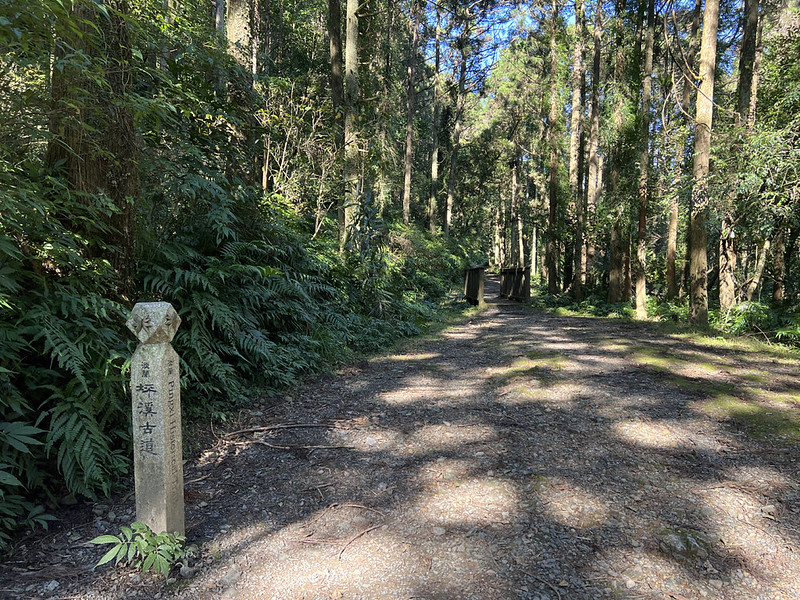
Turtle Island Observation Deck
After another river crossing, you'll arrive at an observation deck overlooking the ocean and Turtle Island—an
excellent place to rest and enjoy the view. From here, the route continues onto the Shihking Historic Trail
(TK2-19).


Signage in this area can be confusing. When you reach the junction, take the right-hand trail. I made the
wrong turn here on my first visit.

Optional Side Trip: Mt. Taihe
As the trail becomes more rugged—but still manageable—you'll reach a junction leading to Mt. Taihe. A small
Earth God temple, Dingpingxi Temple, stands near the junction.


Curious, I decided to take the detour. The climb is steep, but the trail is well-maintained. It took me about
30 minutes to reach the summit, where you'll find Mt. Taihe Jin Temple (金殿).

The views from the top are excellent. If you prefer, Mt. Taihe can also be done as a separate out-and-back
hike from Wai'ao Train Station.


Final Descent to Wai'ao
After returning to the junction, I followed the paved road to Huangjinling Earth God Temple, where toilets are
also available.

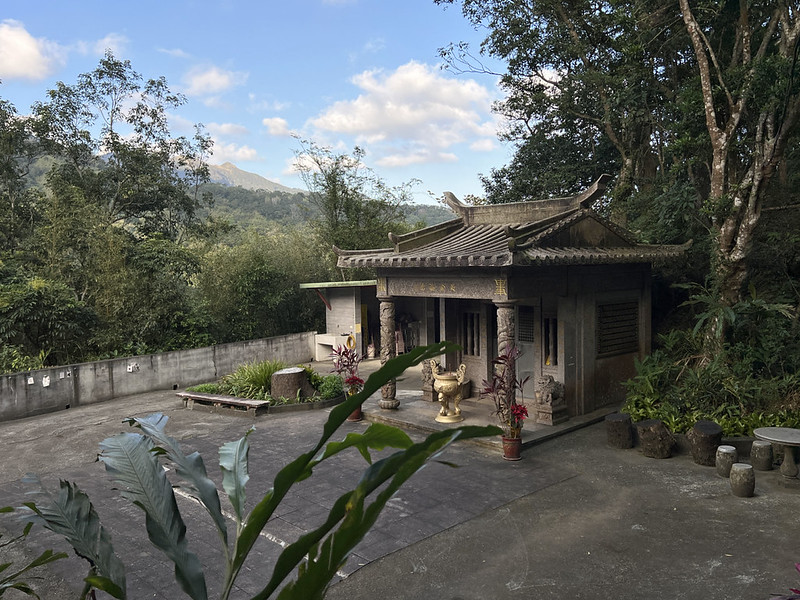
From here, the trail toward Wai'ao becomes steep and rugged again, especially if you detour toward Mt. Wai'ao.
Expect a sustained climb before the final descent.

When Turtle Island comes back into view, Wai'ao Train Station is not far. Pay close attention near the
end—don't miss the final junction leading down to the station.


Getting There and Back: Public Transportation Tips
About buses that start with F
When you check the buses in Taipei, especially in remote areas, you will find buses with an F prefix; these are free buses for local people, especially older people who don't or can't drive. Those buses don't allow passengers to stand for safety reasons. Once all the seats are taken, passengers have to wait for the next one.
There are conflicts between the local people and hikers. Unless there are no buses available, I will not put those F buses for your reference. If you take those buses, always let local people board first.
From Keelung Train Station to Nuandong Valley/Lapopo Village
To Shifen Train Station:
- By train: Take a train and get off at Ruifang Station or Dadu Station, and then take the Pingxi Sub-line and get off at Shifen Station. Check the trail schedule here, and remember to click the "Accept Transfer" button.
- By bus: Take Bus 795 at the MRT Taipei Zoo Station and get off at the Shihfenliao or the Shihfen Visitor Center.
To Weihui Temple in Ganjiao:
To Hubao Pond:
Take bus F815 at the Shuangxi Train Station and get off at the Hubaotan stop.
To Wantan:
Take bus F815 at the Shuangxi Train Station and get off at the Wantan stop.
To Wai'ao Station:
Practical Tips: Weather, Gear, Physical Fitness, and Preparation
- Always check the weather before every hike. Taiwan's seasons matter: summer – autumn brings heat and typhoons; high mountains get cold and can see snow in winter.
- Rural buses can be infrequent, and schedules change. Always check the live timetable and note your last return bus before you set off — missing it is the most common way a great hike can go wrong. If there is a typhoon or torrential rain coming, the buses might stop running for precaution.
- Begin your hike in the morning — you'll have more daylight, cooler temperatures, and time to spare if buses or weather don't cooperate.
- Waterproof everything inside your backpack. The afternoon thunder showers are the typical weather pattern in Taiwan especially in summer. Keeping everything dry is crucial to have a safe and enjoyable hike in Taiwan.
- The trail terrain might be rougher or more treacherous than you thought. Hiking 25 or even 30 km in a day might be common in your home country. However, some short-distance trails like 5 km in Taiwan can take up the same time for you to finish a 30 km hike back home. Please do not take everything for granted.
- Although it is easy to get around by bus in Taiwan, that doesn't mean that you can find shops or stores easily on the trails. Always prepare well and do your homework before your hike.
Planning a permit-free hike by bus?
Skip the research. This guide covers 45 relaxing, permit-free trails in every Taiwan county — with trailhead maps and the exact public transport to reach each one. Everything you need to just show up and hike.
Get all 41 trails + maps →